Time, Mold, and Magic: The Wild Science of What Actually Happens When Cheese Gets Old
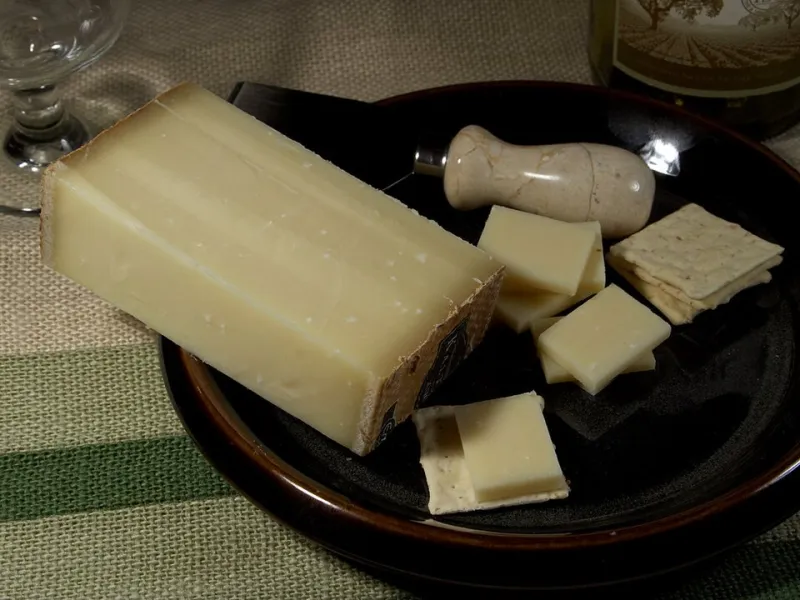
Photo: Jon Sullivan, Public domain, via Wikimedia Commons
Here is a fact that will make you look at your cheese board differently forever: the cheese you are eating is alive. Not in a metaphorical, poetic sense. In a literal, microbial, teeming-with-biological-activity sense. And the longer it has been aging in a cave or a cellar or a carefully climate-controlled room somewhere in rural Vermont or the mountains of Colorado, the more extraordinary the things that have been happening inside it.
Cheese aging — affinage, if you want to sound fancy at dinner parties, and you do — is one of the most complex biochemical processes in all of food production. It involves the coordinated activity of bacteria, molds, yeasts, and enzymes working in concert (and sometimes in conflict) over months or years to transform a relatively simple starting material into something of staggering complexity. The fact that humans figured out how to manage this process before they had any idea what was causing it remains one of history's more impressive accidents.
Let's get into it.
The Starting Gun: What Happens Right After the Vat
Fresh cheese — the kind you make and eat within days — is a relatively uncomplicated thing. Milk proteins and fats have been coagulated, whey has been drained, and you have something that tastes clean, mild, and lactic. Pleasant. Straightforward. The biochemical equivalent of a blank canvas.
The moment aging begins, however, the canvas starts to get complicated.
The primary drivers of early-stage aging are bacteria — specifically the lactic acid bacteria introduced during cheesemaking, which continue metabolizing lactose (milk sugar) and producing lactic acid as the cheese cures. This acidification creates an environment that shapes everything that follows, influencing which other microorganisms can survive, how enzymes behave, and how moisture moves through the paste.
Food scientists describe this early phase as "establishing the conditions for complexity" — which is a very restrained way of saying that the cheese is setting the stage for something genuinely wild.
Proteolysis: The Reason Aged Cheese Tastes Like That
If you've ever wondered why a two-year aged cheddar or a well-aged Parmigiano-Reggiano has that intense, savory, almost meaty depth that a fresh cheese completely lacks, the answer is a process called proteolysis. It is, without question, one of the most important things happening in your cheese.
Proteolysis is the enzymatic breakdown of milk proteins — primarily casein — into smaller peptides and then into free amino acids. Those amino acids are flavor compounds. As aging progresses and proteolysis continues, the concentration of free amino acids in the cheese paste increases dramatically, and with it the intensity and complexity of flavor.
Some of those amino acids — glutamate in particular — contribute directly to umami, the savory depth that makes aged cheese so compulsively snackable. Others break down further into volatile aromatic compounds that you perceive as flavor even though you're technically smelling them. The distinction between taste and aroma, it turns out, is considerably blurrier than most of us learned in grade school.
The crunchy white crystals you find in aged Gouda or long-aged cheddar? Those are tyrosine crystals — a specific amino acid that accumulates as proteolysis advances and eventually precipitates out of solution. They are not a flaw. They are a trophy. They are the cheese's way of showing its work.
Lipolysis: Fat, Glorious Fat, Doing Interesting Things
While proteolysis is transforming the protein structure, a parallel process called lipolysis is dismantling the fat. Lipase enzymes — present naturally in milk and also introduced through certain starter cultures — break milk fat into free fatty acids, which are themselves powerful flavor compounds.
Short-chain fatty acids produced by lipolysis are responsible for some of cheese's most distinctive aromas: the sharp, almost goat-like tang of aged pecorino, the pleasantly funky quality of a well-aged blue, the rich buttery depth of a long-aged raw milk tomme. Different cheeses express lipolysis differently depending on the milk used, the cultures employed, and the conditions of aging — which is why two cheeses aged for the same duration can smell and taste completely different.
In bloomy-rind cheeses like Brie-style wheels, lipolysis near the rind — driven by the molds growing on the surface — produces a progression of flavor from the outside in. The paste directly beneath the rind is typically the most complex and the most pungent; the center, which lipolytic enzymes haven't fully reached, remains milder. This is why a properly ripe bloomy rind cheese is a gradient of experience rather than a uniform thing. Eat a slice from the rind to the center and pay attention. You're tasting time, expressed spatially.
The Cave's Role: Why Environment Is Everything
All of this biochemical activity is exquisitely sensitive to environmental conditions. Temperature, humidity, air circulation, and the microbial ecology of the aging environment itself all shape the outcome in ways that cheese scientists are still working to fully understand.
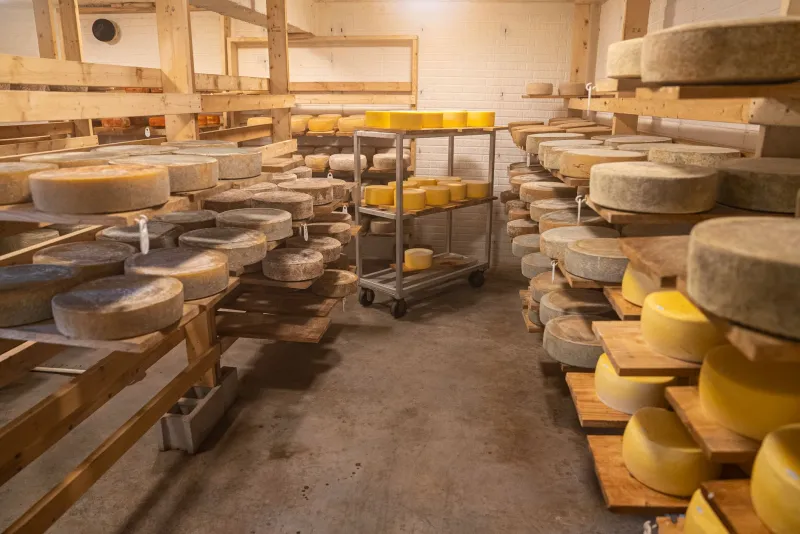
Lower temperatures slow enzymatic activity, extending the timeline of transformation but also allowing for the development of subtler, more nuanced flavors. Higher humidity encourages rind development and surface mold activity. Specific cave environments — and yes, some American cheesemakers age their cheeses in actual caves — harbor unique microbial communities that colonize cheese surfaces and contribute flavors that simply cannot be replicated in a standard aging room.
Several American cheesemakers have experimented with aging the same base cheese in different environments and have found that the results diverge dramatically within a matter of weeks. The milk is identical. The make process is identical. The aging environment is the variable, and it turns out to be a very significant one.
"We joke that the cave has opinions," one Colorado cheesemaker told us. "But it's not really a joke. The cave absolutely has opinions and you learn to work with them."
What Three Months Versus Three Years Actually Means
To put all of this in practical terms: a three-month cheddar has undergone meaningful proteolysis and some lipolysis, but the process is still early. The flavors are clean, relatively simple, and approachable. A three-year cheddar has been through a sustained, intensive biochemical transformation. The protein structure has broken down significantly. Free amino acids have accumulated. Volatile aromatics have developed and concentrated. The fat has been partially restructured. The result is not just "more flavorful" — it is categorically more complex, with layers of flavor that a young cheese is simply not capable of producing.
This is why great aged cheese is priced the way it is. You are not paying for pretension. You are paying for time, and for all the careful work of keeping the environment exactly right while time does its thing.
The next time you taste a seriously aged cheese — really taste it, slowly, paying attention — you are experiencing the accumulated output of months or years of coordinated microbial activity. It is, if you think about it, one of the most elaborate things humans have ever asked microorganisms to do on their behalf.
We think that deserves a moment of appreciation. And possibly a second slice.